Monitoring and operations capabilities
Infrastructure visibility for servers, websites and services.
Operational and availability reporting.
Certificate inventory and expiry visibility.
Browser-based server terminal when entitlement permits.
Run approved operational commands across multiple servers.
DevOps-focused operational workflows and projects.
Additional infrastructure administration capabilities.
Programmatic access where enabled by entitlement.
Customer-facing white-label capability.
Organization logo and brand presentation.
Separate infrastructure contexts and customer workspaces.
Operational notes and collaboration.
Pair, inspect and manage E4S agents.
Live operational overview and incident visibility.
Panel and configured notification-channel alerts.
Operational backup visibility and controls.
SSL and certificate management capabilities.
Subscription and billing visibility.
SaaS administration capability for eligible installations.
Server monitoring
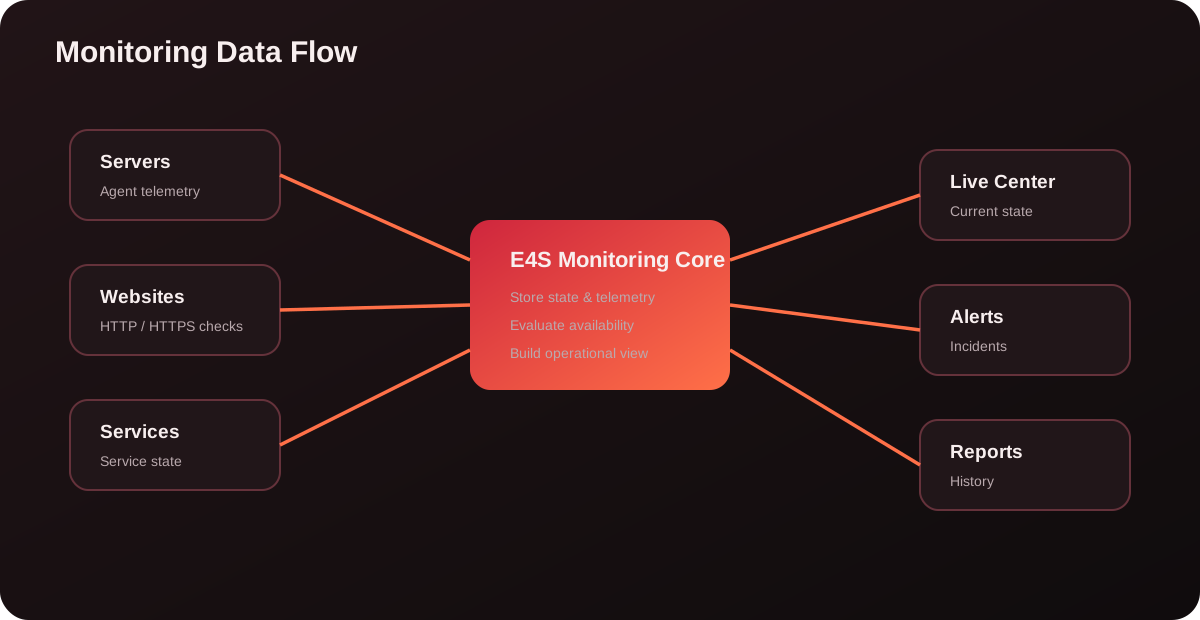
A monitored server can expose CPU, memory, disk, network and service state. Agent-enabled servers can provide deeper operating-system telemetry and operational capabilities.
Website monitoring
Website checks are designed to identify HTTP/HTTPS availability, response failures and operational incidents. Website assets can be organized by workspace and customer scope.
Service monitoring
Typical monitored services include web servers, database services, mail protocols, SSH, FTP, Redis and custom TCP/service definitions.
Roles and workspaces
| Role concept | Typical responsibility |
|---|---|
| Owner | Platform-level administration and business controls. |
| Team | Operational access delegated by the Owner. |
| Client | Access to infrastructure assigned to the client's workspace and scope. |
Workspace membership and asset scope determine what infrastructure a user can access. Entitlement still controls whether a platform feature is available at all.